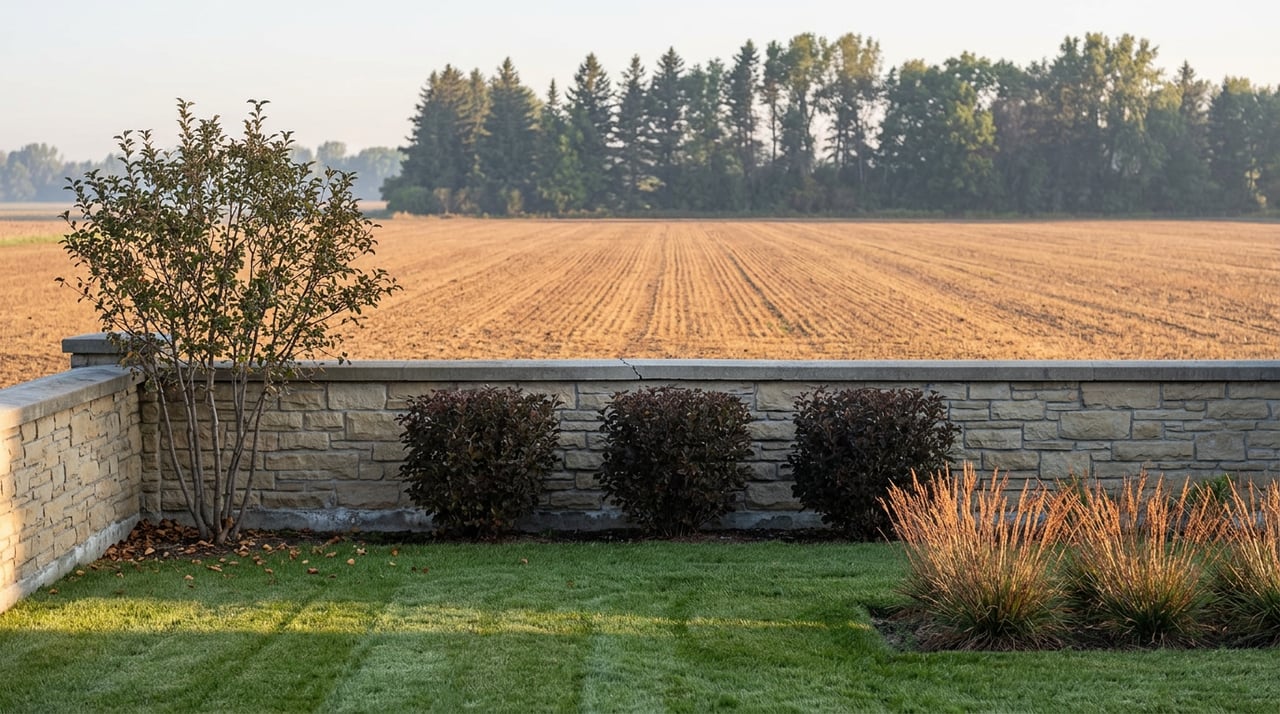
Drive south past the pickleball courts and the baseball fields on any weekend morning and you'll eventually run out of pavement. The lots give way to open farmland, quiet enough that you can still hear the wind moving through whatever's growing that season. That farmland has a name now, at least on paper: Hammerhead. And depending on what happens over the next year or two, it could become the site of Tea's first city-owned golf course.
Most residents have probably caught a headline about this by now. What's easy to miss in the quick version is the part that actually matters if you live here: this isn't a private country club looking to plant itself on the edge of town. It's a proposal built so the golf course gets paid for by the same houses going up around it, before those houses are even framed. That's a different order of operations than what Tea is used to.
What's Actually Being Proposed
The idea surfaced publicly when the Tea City Council heard a presentation on May 18, 2026, from landowner Mike Poppens and developer Steve Van Buskirk of Van Buskirk Cos. The pitch: an 18-hole golf course anchoring a new residential area on the south end of the city, near 273rd Street and 468th Avenue, not far from Interstate 29's exit 73.
The numbers on the table so far:
- A full-service course with a practice facility, clubhouse, and restaurant, estimated at $15 million to $19 million to build
- Somewhere between 320 and 360 total residences, described as a mix of single-family homes, villas, and rental townhomes
- 380 acres of what's currently family farmland
- Room left over on the site for some commercial development
Van Buskirk has said the course would be built as a city-owned facility, similar in concept to how Sioux Falls operates courses like Elmwood or Kuehn Park rather than how a private club like Bakker Crossing, the semi-private course currently sitting between Tea and Harrisburg, operates. That distinction is the whole story. If this gets built the way it's currently described, it won't be a gated amenity reserved for members. It would belong to the city the same way the ballfields and the park already do.
The Name Comes From an Arrowhead, Not a Fish
The project takes its name from something Poppens' father used to find while working the ground. According to Poppens, his dad had a habit of turning up old tools in the field, and a hammerhead-style stone artifact was one of the more prized finds over the years. When Poppens and Van Buskirk sat down last fall to figure out what to call the project, that story became the name.
It matters more than trivia usually does here, because it points to how long this particular piece of ground has been farmed by one family. Poppens has described the land as the core of his family's farm operation, built up over generations of work. That's the land currently under discussion for 320-plus rooftops and an 18-hole course.
Funded By What Gets Built, Not the Other Way Around
Here's the mechanism that separates this from a typical annexation story. In most fast-growing towns, recreation infrastructure lags behind housing by years. Subdivisions fill in first. Ballfields, trails, and pools get added later, usually funded out of a city's general fund once there's enough tax base to justify the spending. Tea has followed that pattern before.
Van Buskirk has framed Hammerhead differently. As he put it to the council, the future houses and future taxes would pay for the golf course itself. In other words, the recreational anchor isn't something residents wait years for after the subdivision fills in. It's built into the financing from the start, alongside the streets and the sewer lift station the development will also need.
Tea's city administrator, Justin Weiland, has said the city doesn't currently have another landowner or developer in serious conversations for the next phase of residential growth, which makes this proposal the primary option on the table if Tea wants to keep adding housing at anything like its recent pace. That context matters for anyone wondering whether this is one option among many or effectively the only one being seriously discussed right now.
How Close It Actually Sits to What's Already Here
Part of what makes this different from a typical edge-of-town development is how it connects to the town Tea residents already use. Van Buskirk has described the northeast corner of the property as sitting kitty-corner from an elementary school, straight south of the newer pickleball courts, a short walk from the baseball fields and the larger park nearby, and within walking distance of historic downtown Tea.
That's not a stand-alone project dropped onto a cornfield with its own private entrance. It's positioned to plug directly into the same recreational corridor residents already walk, bike, and drive through most weekends. If it gets built, someone living in one of the new villas could plausibly walk to a Little League game, then to Main Avenue for dinner, without touching a car.
Where It Actually Stands Right Now
None of this is approved. The May 18 meeting was a presentation, not a vote. The council's direction afterward was to keep researching costs and infrastructure needs, with the price tag being the biggest open question. Van Buskirk has said the team is exploring financing options for the course itself, on top of the roads and sewer work the surrounding development will require.
There's also a longer-term piece of context worth knowing: I-29's exit 73, the interchange closest to this site, is scheduled to be replaced in 2030. Any construction timeline for Hammerhead would likely run alongside that highway work, not ahead of it, which gives residents a rough sense of how many years out a finished course realistically sits, even in an optimistic scenario.
Why This Fits the Moment Tea Is In
None of this is happening in a vacuum. According to the city's own 2025 development summary, Tea added roughly 500 new residents, 60 living units, and more than $34 million in building permit value last year alone. That's the backdrop against which a proposal like Hammerhead makes sense: a city that's already absorbing significant growth, looking at a way to make the next wave of that growth pay for something residents get to use rather than just something they get to live near.
Whether Hammerhead becomes an actual golf course or stays a set of numbers on a council agenda depends on financing details that are still being worked out. But the structure of the idea, building the amenity into the cost of the houses instead of asking the city to catch up later, is worth watching regardless of how this specific proposal shakes out. It's a different way of thinking about how Tea grows, and it started with one family deciding what to do with land they'd farmed for decades.
If you're curious about how projects like this tend to shape the neighborhoods around them once they move from proposal to groundbreaking, that's exactly the kind of local read Merchant Home Group keeps close watch on. Put us to work.