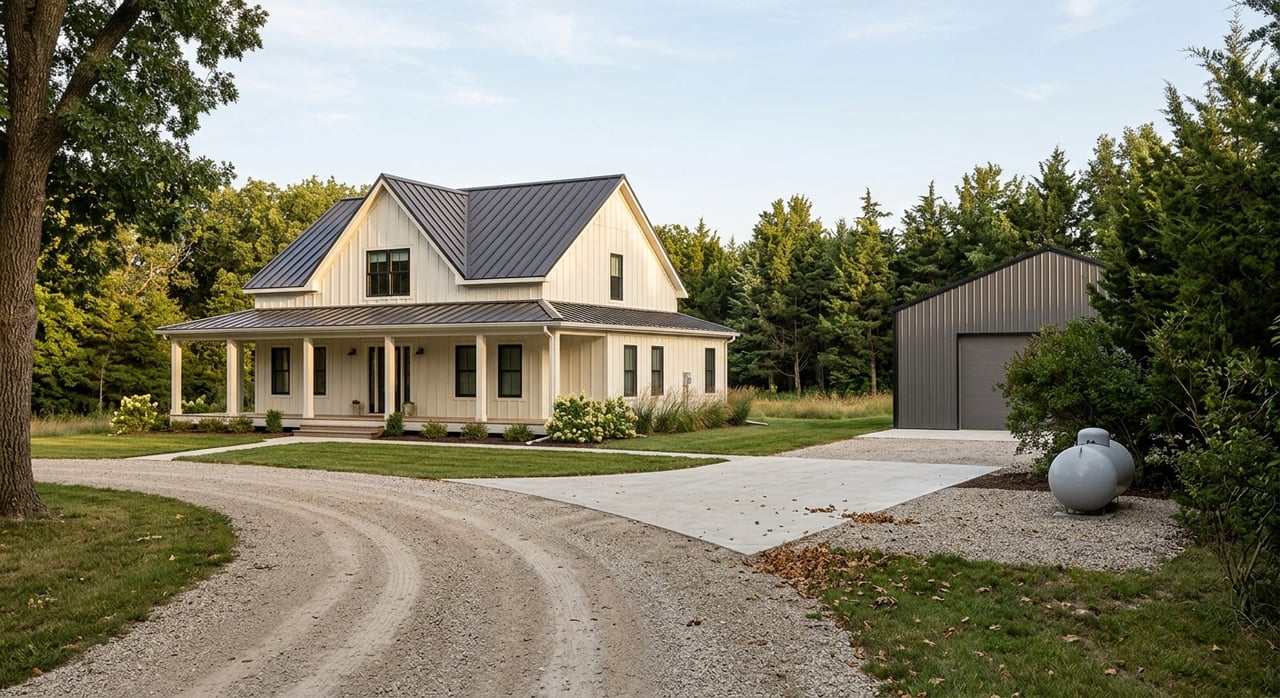
Dreaming about more space outside Tea? An acreage can offer room to spread out, quieter surroundings, and flexibility that a standard suburban lot may not provide. But near Tea, acreage living comes with a different set of questions about utilities, maintenance, permits, and future growth. If you are weighing the move, this guide will help you think through the practical side before you buy. Let’s dive in.
Why Tea-Area Acreages Need a Closer Look
Tea is not a static small town on the edge of nowhere. The city says it was home to 8,051 people as of January 1, 2026, and 900 housing units had been built since the 2020 census. That means acreage properties near Tea sit close to an active growth corridor, not a frozen-in-time rural market.
That growth matters because a property that feels country today may sit inside a long-range planning area for future development. Tea adopted its 2050 Comprehensive Plan on October 20, 2025, and the plan boundary stretches roughly north to the 85th Street corridor, east to Interstate 29, south to 274th Street, and west to South Dakota Highway 17. If you are considering acreage living near Tea, it is smart to think beyond the current view and ask how the area may change over time.
Know Who Governs the Property
One of the first things to confirm is whether the property is inside Tea city limits or in Lincoln County’s unincorporated area. That single detail affects zoning, permits, and who handles enforcement. It can also shape what you may be allowed to build or change after closing.
Lincoln County handles planning and zoning in unincorporated areas, while municipalities manage their own planning and zoning within their boundaries. Near Tea, that means two acreage properties with similar lot sizes can come with very different rules depending on where the parcel sits. Before you get attached to a property, make sure you know which office has jurisdiction.
Utilities Matter More on Acreage
Acreage buyers often focus on the land first, but utility questions should come early. If a property is inside Tea and connected to city services, the city handles utility service through City Hall. Tea’s current residential minimum for water and sewer is $63.25 per month.
Large-lot living can change that cost quickly if you plan to irrigate grass, trees, gardens, or shelterbelts. Tea uses tiered pricing, and water usage above 25,000 gallons is billed at $25.00 per 1,000 gallons. The city also notes future capacity concerns and has posted watering restrictions, so outdoor water use is not just a lifestyle issue. It is a budget issue too.
If the parcel is outside municipal service, you need to understand both water and wastewater from the start. For on-site wastewater in Lincoln County, the application requires documentation such as an engineered design or report, or percolation and soils testing when applicable, along with an as-built showing the final system location. That makes records, design details, and site suitability important parts of your due diligence.
Septic and Soils Can Shape the Deal
Not every acreage is equally easy to build on, expand, or maintain. South Dakota wastewater rules require system designers to consider factors like distance to a water well, slope, groundwater, lot size, and percolation rate. In plain terms, the land itself can affect what is possible and what it may cost.
Lincoln County also points buyers toward GIS resources for USDA soil survey information, FEMA flood maps, South Dakota Geological Survey resources, and the National Wetlands Inventory. The county’s master drainage plan says construction should be prevented on sites that are environmentally unsuited for buildings or septic systems. A parcel that looks affordable on paper may become much more complicated if drainage, soils, wetlands, or floodplain concerns limit your options.
Driveway Access Is an Ongoing Responsibility
One of the biggest surprises for first-time acreage buyers is that a long driveway is not just a nice feature. It is also a maintenance commitment. If private access comes from a county road, Lincoln County requires a driveway or access permit, and applications should be submitted at least two weeks before construction.
The county also states that the permit expires after 180 days if construction does not begin. Just as important, the owner is responsible for access surfacing, vegetation control, snow and ice removal, and certain culvert repairs. If you are planning a shop, barn, or expanded access point later, those rules become even more important to review before you buy.
More Land Usually Means More Upkeep
Acreage living often sounds simple until you list out the routine work. Weed control is one example. Lincoln County’s weed department asks residents to control declared noxious weeds on their land, and the county’s spraying season runs from late spring through fall.
That means acreage stewardship is not just mowing once in a while. Depending on the property, you may need a plan for vegetation management, driveway clearing, drainage watch, and seasonal upkeep. The larger the lot, the more valuable it becomes to think honestly about your time, equipment, and maintenance budget.
Inside Tea, property owners also have maintenance responsibilities that may affect day-to-day living. Trees must be pruned so they do not obstruct sidewalks or traffic signs, sidewalks must be cleared within 24 hours after snowfall, and residents are responsible for keeping snow clear around mailboxes after plowing. If your acreage is within city limits, those rules may be part of your routine.
Future Improvements Need Research
If you are buying acreage because you want room for future projects, do not wait until after closing to ask what is allowed. Tea has specific rules that may apply to common acreage goals. For example, sheds that are 200 square feet and larger require a building permit.
The city also has setback rules for accessory structures near the front yard or principal structure, along with rules for fences, parking, and backyard hens. Tea allows up to 6 hens per residence. These details may seem small at first, but they can shape whether a property truly fits your plans.
Questions to Ask Before You Buy
When you tour a Tea-area acreage, try to move beyond the excitement of extra space and ask practical questions early. A strong property decision usually comes from understanding how the land works, not just how it looks.
Here are some of the most important questions to ask:
- Is the property inside Tea city limits or in unincorporated Lincoln County?
- What provides water service, and what provides wastewater service?
- If there is on-site wastewater, can you review the permit file, design documents, soil or percolation data, and pumping history?
- Who maintains the driveway and culvert?
- If you want to change or add access, is a new approach permit required?
- Are there drainage, wetland, soil, or floodplain concerns that could affect building sites or future costs?
- What improvements would need permits after closing?
How Merchant Home Group Helps You Evaluate Acreage
Buying acreage near Tea is rarely just about choosing more land. It is about weighing trade-offs between privacy, utility systems, maintenance, access, and future growth around the property. That kind of decision gets easier when you have a local team helping you ask the right questions from the beginning.
At Merchant Home Group, our process is built to bring clarity to each step. We help you compare properties, understand how location affects your decision, and stay focused on the details that can influence long-term cost and usability. Whether you are relocating, moving up, or searching for a better fit outside the city, our team can help you navigate the Tea-area acreage market with a practical plan.
If you are considering acreage living near Tea, put local guidance and a clear process to work for you. Connect with Merchant Home Group to start your next move with confidence.
FAQs
What should you verify first when buying acreage near Tea, South Dakota?
- Confirm whether the property is inside Tea city limits or in unincorporated Lincoln County, because that affects zoning, permits, and which office oversees the parcel.
How do water and sewer costs affect acreage living near Tea?
- If the property uses Tea city utilities, the residential minimum for water and sewer is $63.25 per month, and water use above 25,000 gallons is billed at $25.00 per 1,000 gallons, which can matter on larger lots with irrigation needs.
What should you ask about septic on a Tea-area acreage?
- Ask for the on-site wastewater permit file, design documents, soil or percolation information when applicable, and pumping history so you understand how the system was approved and maintained.
Why do soils and drainage matter on acreage near Tea?
- Soils, slope, groundwater, wetlands, and floodplain conditions can affect where you can build, whether a septic system will work, and how much site preparation may cost.
Who maintains a driveway on acreage in Lincoln County?
- For private access off a county road, the property owner is responsible for surfacing, vegetation control, snow and ice removal, and certain culvert repairs.
Can you add a shed or other outbuilding on a property near Tea?
- It depends on the property location and local rules, but in Tea, sheds 200 square feet and larger require a building permit, and accessory structures must follow applicable setback rules.